Imagine steering your small business ship into the vast ocean of opportunities, only to find yourself amidst a storm with no insurance lifeline. The essence of small business insurance is often underestimated yet remains a pivotal component for business survival and growth. Navigating through risks and uncertainties, insurance acts as the sturdy vessel ensuring your dreams don’t sink.
In this comprehensive guide, we’ll unveil the secrets behind small business insurance that successful entrepreneurs swear by. From understanding the core importance to selecting the right policies, this journey with us will equip you with invaluable insights, ensuring your venture sails smoothly and profitably.
Importance of Small Business Insurance
Did you know that 40% of small businesses never reopen after a disaster? It’s a staggering fact that highlights just how critical insurance is for survival.
Without insurance, your business is like a ship sailing without a lifeboat. You might be fine for a while, but when the storm hits, you’re in trouble.
Common Risks Faced by Small Businesses
Small businesses face a gauntlet of risks every day. From property damage to liability claims, the threats are real and ever-present. Imagine a slip-and-fall accident at your storefront or a sudden fire. These incidents can cost tens of thousands in damages.
Here is the deal: without proper insurance, these costs come straight out of your pocket, possibly sinking your business.
Potential Consequences of Not Having Proper Insurance Coverage
The risks of not having insurance aren’t just monetary. They can affect your reputation and future growth. Legal fees, lost inventory, and medical costs can pile up fast, leaving you scrambling.
Pro Tip:
Invest in a comprehensive insurance package that covers all angles. It’s worth every penny.
How Insurance Contributes to Business Continuity
Insurance isn’t just a safety net—it’s your business’s lifeline. It keeps you afloat, ensuring you can continue operations despite setbacks. Business interruption insurance, for example, can cover lost income during downtimes.
Picture this: a storm damages your store, but insurance allows you to maintain payroll and rent. Your business keeps ticking, while others might fold.
Types of Small Business Insurance
Did you know that 40% of small businesses don’t reopen after a disaster? That’s where insurance comes in. It’s not just a safety net; it’s a lifeline.
Small business insurance is like a tailored shield for your venture, safeguarding against potential financial losses. But, how do you choose the right one for your needs?
Common Types of Small Business Insurance
Before diving into the specifics, it’s crucial to grasp the variety of insurance policies available. Each type has a unique purpose and fits different business scenarios. Here’s a quick look:
| Insurance Type | Coverage Description | Suitable For | Typical Cost |
|---|---|---|---|
| General Liability Insurance | Protects against claims of bodily injury or property damage. | Most small businesses | $500-$1,000/year |
| Professional Liability Insurance | Covers negligence and errors in services provided. | Service-based businesses | $600-$1,800/year |
| Property Insurance | Protects physical assets from risks like fire or theft. | Businesses with physical locations | $750-$2,500/year |
| Workers’ Compensation Insurance | Covers medical expenses for injured employees. | Businesses with employees | $0.75-$2.74 per $100 of payroll |
General vs. Professional Liability Insurance
Both are crucial, but they serve different purposes. General liability covers physical risks, like someone slipping in your store. But professional liability is all about service-related mistakes, like giving bad advice.
Here’s the deal: you might need both, especially if you work directly with clients. Think of general liability as your everyday shield, and professional liability as your specialized armor.
Property Insurance for Business Assets
Imagine a fire sweeping through your office. Without property insurance, you’re looking at a complete loss. Property insurance covers everything from the building to the equipment inside.
Pro Tip: Always take an inventory of your assets. It’ll make claims smoother and ensure you have the right coverage.
Significance of Workers’ Compensation Insurance
Ever thought about what happens if an employee gets injured? Workers’ compensation is not just a legal requirement; it’s a moral one. It ensures employees are cared for and avoids lawsuits.
Without it, you could face hefty fines and unhappy workers. It’s the backbone of a secure workplace environment.
Factors Influencing Insurance Costs
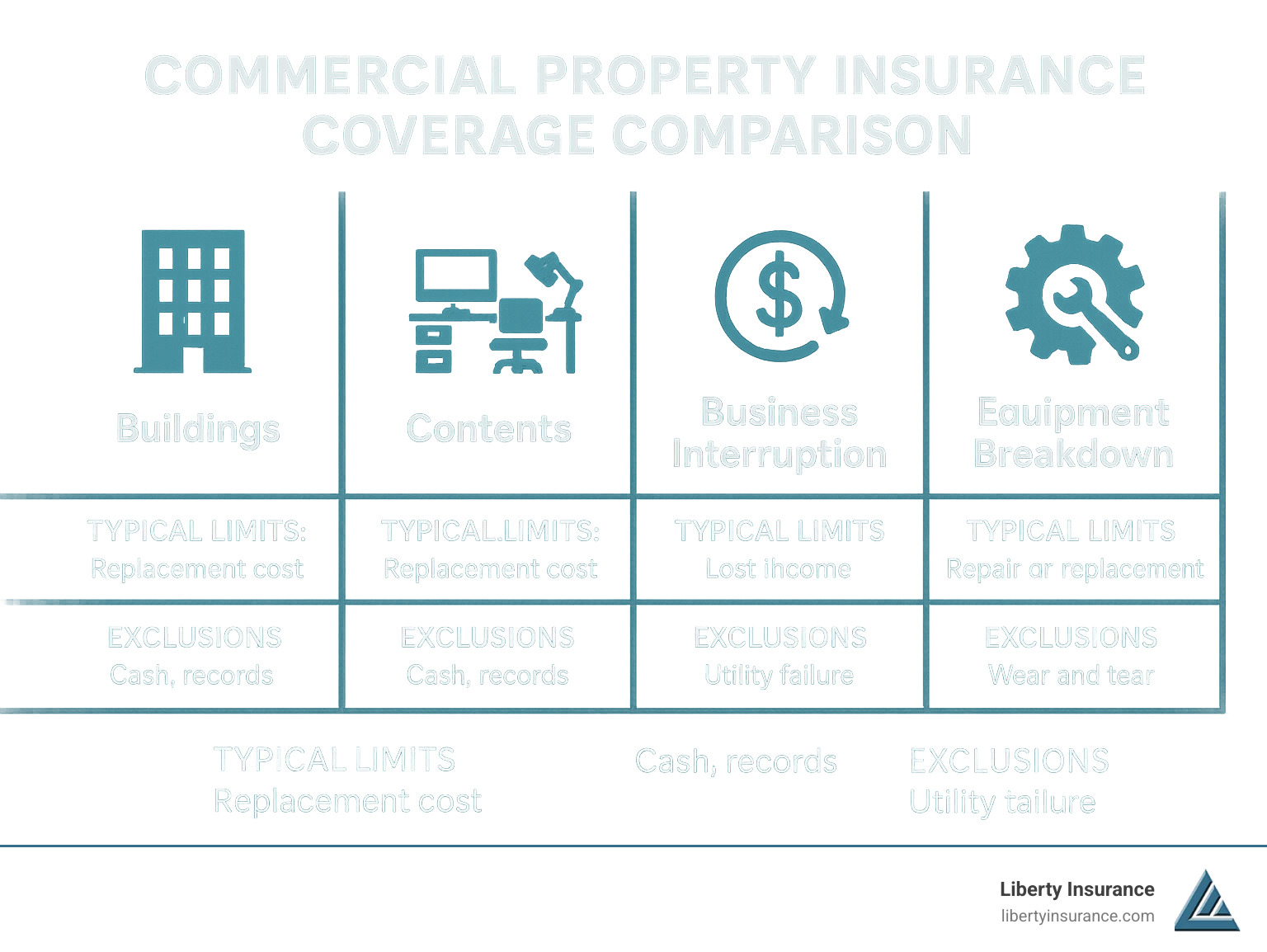
Have you ever wondered why your business insurance costs more than your competitors? It’s not just a roll of the dice. In fact, multiple factors come into play when determining your premiums.
Here is the deal: understanding these factors can help you make strategic decisions to lower your insurance costs. Let’s dive into the nitty-gritty.
Business Size and Industry Type
Think bigger business means bigger costs? You’re right! The size of your business directly impacts insurance premiums. Larger businesses often require more coverage due to increased assets and potential liabilities. But it’s not just about size. The industry you operate in also plays a pivotal role. High-risk industries, like construction or manufacturing, usually face higher premiums due to the increased likelihood of accidents or damage.
Impact of Claims History
Your claims history is your insurance report card. A spotless claims history can lead to lower premiums, while frequent claims can make your rates skyrocket. Insurance companies see a history of claims as an indicator of future risks. BUT, there’s a silver lining. You can improve your claims record by investing in risk management strategies and safety protocols.
Methods for Reducing Business Insurance Costs
Want to slash your insurance costs? Start by bundling different policies. Insurance companies often offer discounts when you purchase multiple types of coverage from them. Also, consider raising your deductible. A higher deductible means lower premiums. BUT always ensure you can afford to pay the deductible if you need to make a claim.
Pro Tip: Implement a robust safety training program for your employees. This can reduce the likelihood of incidents, potentially lowering your insurance premiums over time.
These actionable steps can pave the way to more affordable business insurance. Remember, it’s about working smart, not just hard.
Selecting the Right Insurance Policy
Did you know that 40% of small businesses have no insurance at all? That’s a risky game of roulette. BUT, choosing the right insurance can be a game-changer for your business.
Here is the deal: selecting the right insurance policy isn’t just about picking the cheapest option. It’s about finding the coverage that fits your business like a glove. Let’s dive into the steps to make that happen.
Organize Your Checklist
To pick the perfect policy, start with a checklist. You’ll want to break it down into steps. Why? Because getting organized is the first step toward making a smart decision.
- Identify your business’s specific risks.
- Determine the type of coverage you need.
- Set a budget for your insurance premiums.
- Research potential insurance providers.
- Compare policy options.
- Consult with a professional if needed.
- Make your decision.
Assess Coverage Needs Based on Business Activities
Not all businesses are the same. A bakery has different risks compared to a tech startup. Assessing your coverage needs requires understanding your unique business activities.
- List out all your business activities.
- Identify inherent risks associated with each activity.
- Consider potential liabilities and what could go wrong.
- Consult with industry experts if needed.
- Align your insurance needs with your risk assessment.
Compare Insurance Providers and Policies
You wouldn’t buy the first car you test-drive. The same goes for insurance policies. Comparing providers is crucial to ensure you’re getting the best deal.
| Provider | Coverage Options | Premium Costs | Customer Reviews |
|---|---|---|---|
| Provider A | Comprehensive, Property, Liability | $$ | 4.5/5 |
| Provider B | Liability, Worker’s Comp | $ | 4.0/5 |
| Provider C | Property, Liability, Cyber Insurance | $$$ | 4.7/5 |
Pro Tip: Don’t just compare the costs. Look at the breadth of coverage and the provider’s reputation too.
Renewing and Reviewing Insurance Policies Annually
Your business evolves—so should your insurance policy. Renewing and reviewing your policy annually is key to staying protected.
- Schedule an annual review of your insurance policies.
- Assess any changes in your business operations.
- Adjust coverage to match new risks or expansions.
- Negotiate terms if necessary.
- Ensure your policy remains competitive in price and coverage.
Legal Requirements for Business Insurance

Did you know that neglecting insurance requirements could cost your business thousands in fines? Understanding the legal obligations for business insurance isn’t just smart—it’s essential.
Small business owners often get tangled in the web of legal requirements, missing out on crucial insurance obligations. Here’s the deal: failing to meet these obligations can lead to severe financial penalties and jeopardize your business.
Mandatory Insurance: What’s Legally Required?
Every state has distinct insurance requirements for businesses. For example, Workers’ Compensation Insurance is mandatory in almost all states if you have employees. However, the specifics vary: some states require it for just one employee, while others might have different criteria.
Another crucial insurance is Unemployment Insurance, which is a federal requirement but administered by states. The rules can differ drastically from one region to another, so knowing your local regulations is key.
State and Regional Insurance Requirements
Insurance mandates aren’t uniform across the board. In California, you’re required by law to have disability insurance, whereas in Texas, this isn’t a necessity. Such discrepancies can catch business owners off guard.
To make it simple, here’s a comparison of some state requirements:
| State | Workers’ Comp | Disability Insurance |
|---|---|---|
| California | Required | Required |
| Texas | Not Required | Not Required |
Pro Tip: Always check your state’s department of insurance for the most current legal requirements.
Compliance and Its Impact on Business Operations
Compliance isn’t just about avoiding fines—it’s about smooth business operations. Imagine the disruption of a lawsuit or a shutdown due to non-compliance. That’s a risk no small business can afford.
When you’re compliant, you can focus on growth without the looming threat of legal issues. Plus, it builds trust with clients and partners, knowing you’re following the law.
Legal Consequences of Non-Compliance
Ignoring legal insurance requirements is like playing with fire. The penalties? They can be severe, including hefty fines, lawsuits, and even business closure.
More than the fines, non-compliance could lead to a damaged reputation. No one wants to partner with a business that’s known for flouting the law. So, make sure your insurance meets all legal standards and stay on the right side of the law.
Real-Life Case Studies
Ever wondered why some small businesses bounce back from disasters while others crumble? The secret isn’t just grit—it’s having the right insurance.
Let’s dive into some real-life stories that reveal how insurance can make or break a business. These aren’t just tales; they’re powerful lessons you can apply to protect your business.
When Insurance Saved the Day
Meet Joe, the owner of a thriving coffee shop in Seattle. His shop was growing, and things were looking up. Then disaster struck—a fire engulfed his kitchen. Without insurance, Joe would have faced financial ruin.
- Luckily, Joe had comprehensive business insurance.
- His policy covered the damages, allowing him to rebuild quickly.
- He was back in business in just three months.
Joe learned firsthand that insurance isn’t just an expense; it’s a lifeline.
“Insurance was my safety net,” says Joe. “It turned a potential nightmare into a manageable setback.”
The Cost of Skipping Coverage
Then there’s Lisa, who ran a floral shop without insurance. When a flood wrecked her inventory, she had no backup. Her dream crumbled overnight.
- Lisa couldn’t cover the losses.
- She had to close her shop temporarily.
- Rebuilding her business took years—and a lot of loans.
This scenario shows that skipping insurance can lead to catastrophic consequences.
“I thought it wouldn’t happen to me,” Lisa admits. “Now, I know better.”
Lessons from Others’ Experiences
What can we learn from these stories? The key takeaway is that investing in the right insurance is critical. But the question is, how do you know what’s right for your business?
Here is the deal: You need to assess your risks and cover your bases. Don’t gamble with your livelihood.
Pro Tip: “Talk to an insurance specialist to tailor a policy that fits your specific needs,” advises Chuck, a seasoned entrepreneur.
No business owner wants to think about worst-case scenarios. BUT, as these stories show, being unprepared can cost you more than you might ever imagine.
Closure
As we anchor this insightful journey, remember that the right small business insurance isn’t just a safety net; it’s a strategic ally. By understanding and implementing the essential insurance practices, you’re not just protecting your present, but also securing a robust future for your business. So, set sail with confidence, knowing that your enterprise is equipped to weather any storm.
FAQ
What are the three basic types of small business insurance?
The three basic types are general liability insurance, property insurance, and workers’ compensation insurance.
Why is insurance crucial for small businesses?
Insurance protects small businesses from potential financial losses due to unforeseen events like lawsuits, property damage, or employee injuries.
How does business size affect insurance costs?
Larger businesses typically face higher premiums due to increased risk exposure and higher coverage needs.
Can I customize my small business insurance policy?
Yes, many insurers offer customizable policies to fit the specific needs and risks of your business.
What should I consider when renewing my insurance policy?
When renewing, review any changes in your business operations, evaluate past claims, and compare new policy offerings and costs.
How does claims history impact insurance premiums?
Frequent claims can increase premiums, as insurers view this as a higher risk, whereas a clean claims history can help lower costs.
